
Children and Young People with Disability Australia: Belonging is the foundation of inclusion
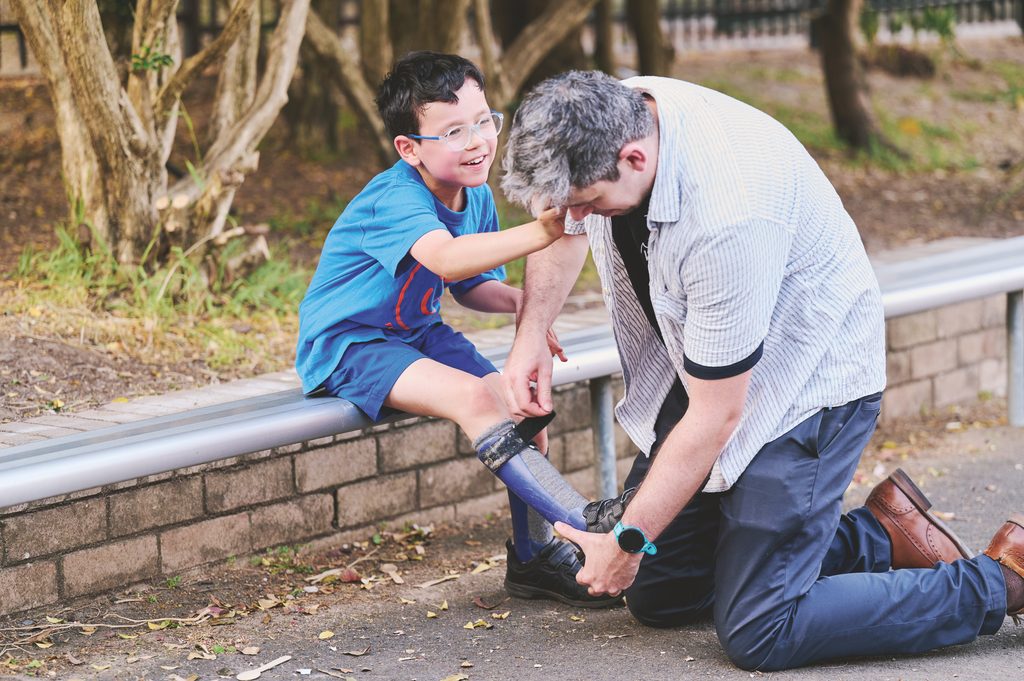
Freya listens carefully as her teacher tells the class to get into groups of three for a counting activity. Nobody approaches Freya and the teacher asks the classroom assistant to sit with and read her the instructions to accommodate her visual impairment. Freya spends more time with adults at school and doesn’t feel like part of the group during lunchtime play. Her peers don’t know her well and feel unsure about approaching her during class activities or play.
Inclusion is not achieved simply by placing students with disability in mainstream settings; it is achieved when those students feel a genuine sense of belonging.
In Australia, inclusive education is underpinned by a range of national and state laws, policies, and funding mechanisms, like the Disability Standards for Education 2005. However, an inclusive education policy review in 2024 highlighted that many students with disability continue to experience exclusion in school settings. Amid ongoing concerns about educational exclusion, organisations such as the Australian Coalition for Inclusive Education (ACIE) have advocated for a national roadmap to strengthen and guide inclusive education across the country.
Defining inclusion and belonging
Inclusive education is defined by the Convention on the Rights of Persons with Disability as “a process of continuing and
pro-active commitment to eliminate barriers impeding the right to education, together with changes to culture, policy and practice of regular schools to accommodate and effectively include all students.”
In practice, it is the actions schools take designing learning, physical spaces, social interactions, adjustments, and supports so all students can access education. Although proxies for inclusion, such as disability enrolments, are measured by schools, this cannot reveal the internal experience of students with disability. Belonging is more difficult to measure but reflects a student’s inner experience.
Belonging is a fundamental human need. When people feel they do not belong, research shows that it can affect their sense of wellbeing. As the findings from a study about the relationship of school belonging and friends in schools reveal, it is “the extent to which students feel personally accepted, respected, included, and supported by others in the school social environment”.
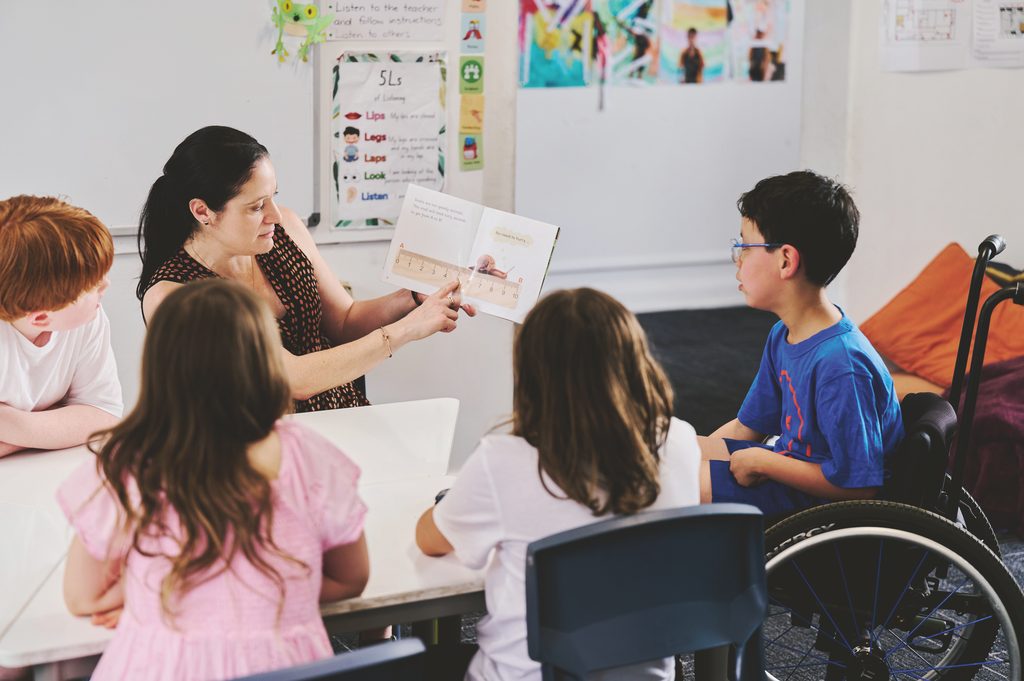
Belonging is critical for students with disability
Theo transferred to a mainstream school 6 months ago from a special school, and his peers have existing strong relationships and don’t see him as one of them. Excited to be on his first school camp, Theo, gets his lunch tray and approaches a table of people he knows who tell him, “sorry this seat is taken”. The same thing happens at another table. Theo eventually finds a table with spare seats, but his sense of shame makes him feel like an outsider. No teacher notices this happening.
Data on inclusion in Australian schools establish that only half of students with disability feel welcome and included in school, while one in four need support to learn but are not getting it. Seventy-five percent have been bullied and seventy-two percent excluded from school activities and events. Students with disability are also more likely to leave school earlier than their peers without disability.
Research about fostering school belonging shows that a student’s sense of belonging is strongly linked to their mental health, academic outcomes, school attendance, positive self-concept, and pro-social behaviours. For students with disability, small moments, like Theo’s experience, can negatively impact that sense.
While a strong sense of belonging can protect against anxiety and depression, its absence increases the risk of poor mental health.
Tangible changes to create belonging are critical for students with disability to succeed.”
Embed belonging in inclusive education
Focusing on belonging can help create more inclusive schools for all students, especially those with disability. Freya’s experience could look very different when belonging is used as a guiding principle:
Freya’s teacher breaks the class into groups and places Freya with a friend and a student she’s never worked with, allowing familiar and new peer connections to develop.
They talk excitedly about the beeper balls they played with at lunchtime, purchased to help Freya with ball games, and Freya feels a sense of belonging in the classroom. Freya’s group is given a large print, high colour contrast instruction sheet which the students take turns to read. This accommodates Freya’s visual impairment and educates her peers on her disability. The classroom assistant comes to the group when Freya asks a question and then the group finishes the task independently.
Theo’s experience could likewise look different:
Excited about his first school camp, Theo gets his lunch tray. He also receives a laminated card with a picture of an animal and a fact about it. Like his peers, he looks for the table with the corresponding animal and is relieved to see some people he knows. They take turns reading animal facts and a teacher checks in to ask about the facts. Later during the animal encounter activity, a student from Theo’s lunch table finds him saying, “this is just like the animal fact you had at lunch”. Assigning tables and providing an ice-breaker means Theo is less stressed about being rejected and has positive interactions that he can build on during camp.
Learning and social opportunities and environments need to be intentionally designed and supported so everyone is included. Without this, unstructured environments can lead to exclusion and bullying that negatively affects students’ sense of belonging.
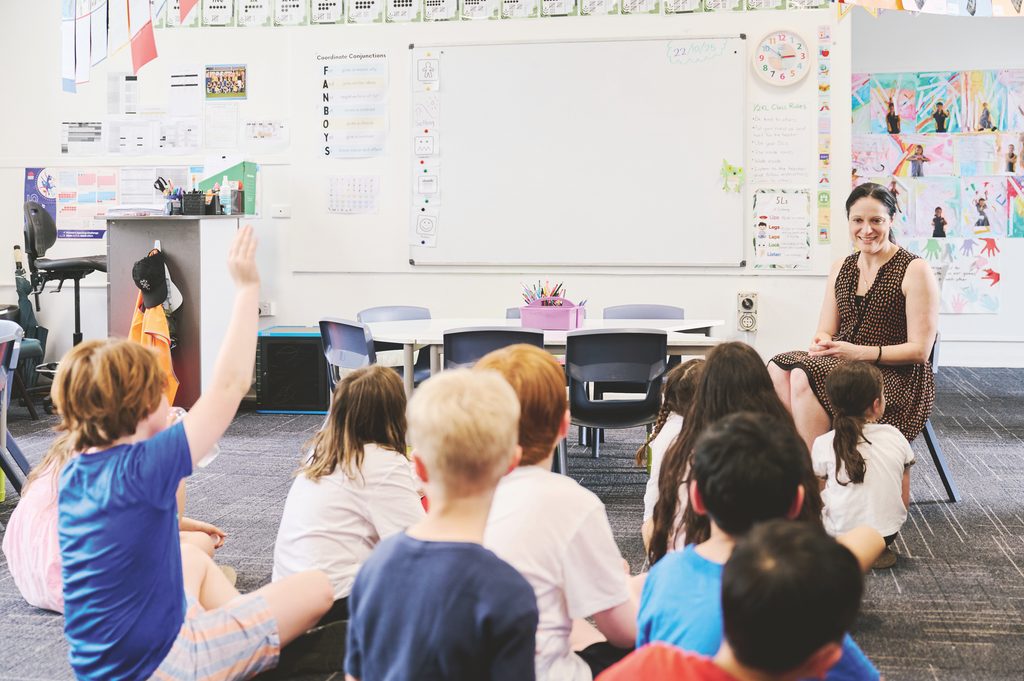
Tangible actions to move from presence and participation to belonging
When inclusion starts with the aim to build belonging, students develop more capacity to manage challenges. Students with disability who feel consistently valued are more likely to see negative interactions as isolated experiences, not as evidence they do not belong. Actions to build belonging for students with disability:
- Track students’ sense of belonging using validated tools, such as the Student Belonging Scale, and adapt these measures into accessible Easy Read and plain language formats.
- Staff emphasise relational approaches and practice unconditional positive regard for students
- Students are provided with accessible opportunities to have a say in things that affect them
- Accessible design uses Universal Design for Learning principles reducing the need for individual modification.
- Social experiences are designed to provide opportunities for all students to build positive peer interactions.
- All students are taught about inclusion and how to recognise when someone is being excluded or struggling to join in.
- The school has positive representation of disability through posters, books and diversity celebrations.
- Families are educated on inclusion and belonging and collaborate in social and educational design.
Conclusion
Inclusion can only be achieved when all students feel a strong sense of belonging at school. Belonging is critical for students with
disability who are excluded from social and learning opportunities at much higher levels than their peers without disability. Schools can embed opportunities to build belonging through intentional design of learning and social environments. This will increase the capacity of all students to navigate the school environment and create genuine inclusion.
1800 222 660
[email protected]
cyda.org.au