Primary English Teaching Association Australia: Supporting EAL/D learners: A whole-school approach

For many Australian schools, supporting EAL/D (English as an Additional Language or Dialect) learners is part of everyday teaching across every classroom and learning area.
Recent research from the Australian Education Research Organisation (AERO)1 reinforces an important understanding: Developing the English language proficiency needed to participate equitably in curriculum learning requires explicit teaching and ongoing support. Students beginning school with Beginning levels of English participate in curriculum learning from their first day of school while continuing to develop the English language proficiency needed to participate equitably over time. On average, this takes at least six years of schooling.
For school leaders, this raises an important question: Where are our EAL/D learners in their English language learning, and do our teachers understand what that means for curriculum teaching and learning? The answers are rarely straightforward. EAL/D learners are multilingual, with different experiences of language learning, different multilingual strengths, and different educational backgrounds.
A student who arrived in Australia six months ago will have different language learning needs from a student who has been developing proficiency in Standard Australian English for four years.
Two students who appear equally confident in everyday conversation may also be at very different stages of learning. All four could be sitting in the same classroom. Supporting multilingual EAL/D learners is a shared responsibility. Every teacher they encounter contributes to their continuing English language learning while building on their existing linguistic knowledge and resources. Schools also need to understand how the language and literacy demands of learning continue to evolve as students move through classrooms, year levels and learning areas.
AERO identifies three important considerations:
- The length and continuity of language and literacy support,
- Teacher and school expectations for EAL/D student learning, and
- The allocation of EAL/D resources in response to students’ needs.
These findings reinforce decades of professional knowledge developed by Australian EAL/D educators, researchers and organisations, including the Australian Council of TESOL Associations (ACTA), and provide a useful framework for considering how schools build a consistent approach to supporting EAL/D learners from the early years through to secondary schooling.
Understanding how language and literacy demands evolve across schooling
AERO reminds us that EAL/D students are learning English while, at the same time, learning the curriculum through English. As students develop greater English proficiency, the language they need for learning also becomes more complex.
This continues throughout their schooling, with the language and literacy demands of learning increasing year by year. Students read increasingly challenging texts, encounter more specialised vocabulary, and are expected to explain, justify and communicate ideas with greater precision. Students are also expected to read, write, speak and think differently in Science, History, Mathematics, English and every other subject; by high schools, these expectations have only increased.
Understanding how those learning demands evolve, and how to support learners to meet them in each learning area, is the next step for schools. It also reinforces the importance of the length and continuity of language and literacy support, recognising that English language development continues as the language of learning becomes increasingly sophisticated.
Understanding learners to make informed instructional decisions
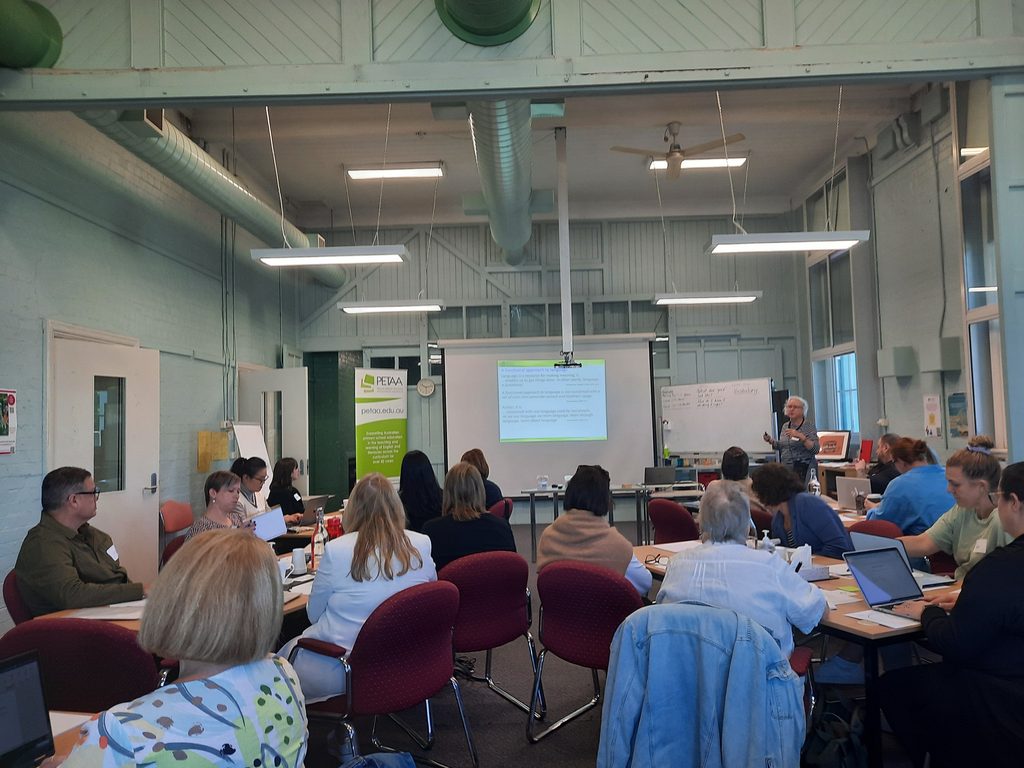
The four learners described earlier may all require different instructional decisions. Effective support for EAL/D learners depends on teachers understanding who their learners are, what they already know, and what they need next. As Dr Margery Hertzberg writes in Teaching EAL/D Students in Mainstream Classrooms, “the English demands in all subject areas mean that all teachers in all grades need to be equipped to plan appropriately for English language learners”.
This begins with recognising that EAL/D learners are not a homogeneous group: they bring different linguistic and cultural resources, prior educational experiences and levels of English proficiency.
Teachers can ensure high expectations for EAL/D learners are realised not by simplifying learning, but by equipping teachers to make informed instructional decisions that provide appropriate challenge and support. Teachers strengthen these instructional decisions by drawing on learners’ funds of knowledge (the knowledge, skills and experiences they bring from their homes, cultures and communities and their funds of identity: The experiences, languages, relationships and identities that shape how they see themselves as learners.
Recognising these strengths enables teachers to select, sequence and scaffold learning in ways that make the language of learning increasingly visible while maintaining high expectations for every learner.
Building teacher expertise in language and literacy
Making informed instructional decisions requires professional knowledge about language, literacy and learning, giving teachers the confidence to maintain high expectations while responding to learners’ diverse needs.
All teachers need to understand how language develops and how literacy builds across the years of schooling. They also need to recognise the language demands of different texts, learning areas and classroom tasks, and make those demands explicit. This enables teachers to make purposeful decisions about when to model, scaffold and guide learning, gradually releasing responsibility as students develop increasing independence.
This professional expertise is not built through scripts or isolated strategies, but through a deep understanding of language, literacy and learning that enables confident instructional decision-making. PETAA’s Position reflects this understanding. It recognises teachers as experts who select and sequence learning, provide explicit teaching, guided practice and ongoing assessment, and make informed professional judgements about what learners need next.
Building shared professional knowledge
The strongest support for EAL/D students comes from a whole-school approach that builds shared professional knowledge about language, literacy and learning across every classroom and every learning area. All teachers need access to tools that will build this knowledge: High-quality professional learning and resources about language and literacy in English and other learning areas, supported professional dialogue and reflection that consolidates and deepens their learning, and collaborative, sustainable improvement cycles that make implementation a shared priority across classrooms and school teams, ensuring all teachers are equipped to put this knowledge into practice.
A whole-school approach creates greater consistency without prescribing scripts, giving teachers a shared framework for planning and programming while preserving the professional judgement needed to respond to individual learners. This is also an efficient and effective way to allocate EAL/D resources in response to students’ needs. Investing in whole-school, collaborative and evidence-informed professional learning and access to high-quality resources builds lasting capability across an entire staff, strengthening teaching for EAL/D students wherever that learning takes place.
When schools invest in teachers’ understanding of language, literacy and learning, they make it more likely that EAL/D learners will not only participate equitably in curriculum learning, but continue to develop the language, literacy and confidence needed to participate fully in education, work and community beyond school and into the future.
Schools can build this capability with PETAA’s evidence-informed publications and professional learning. Teaching EAL/D Students in Mainstream Classrooms (2nd edition) provides practical guidance across Foundation to Year 8 and is the foundation for PETAA’s online professional learning courses in this area.
All relevant resources, readings, and professional learning courses can be found on PETAA’s page for Supporting EAL/D Students. Whole-school learning options are available, along with tools to support literacy improvement cycles.
References
- Australian Education Research Organisation (2025). English language proficiency and equitable curriculum participation for EAL/D learners.
- Australian Curriculum, Assessment and Reporting Authority (ACARA). English as an Additional Language or Dialect Teacher Resource.
- Harper, H. and Feez, S. (Eds.). An EAL/D Handbook.
- Hertzberg, M. and Valdez, C. Teaching EAL/D Students in Mainstream Classrooms (2nd edition). PETAA.
- Adam, H. Transforming Practice: Transforming Lives Through Diverse Children’s Literature.
- Dutton, J., D’Warte, J., Rossbridge, J. and Rushton, K. Tell Me Your Story: Confirming Identity and Engaging Writers in the Middle Years.
- Hammond, J. and Miller, J. Classrooms of Possibility.
02 8020 3900
[email protected]
petaa.edu.au