
Australian Psychologists and Counsellors in Schools: Supporting students through grief and loss

Significant change, grief, and loss are very much a natural part of our lives. It is in fact a universal challenge that will impact all humans at some point. But even though it is an expected and very natural part of life, it can still be extremely challenging time for young people as well as their parents, caregivers and other significant people in their orbits.
These challenges can and will manifest in schools as it impacts upon every area of life and may impact attendance to school, ability to learn and retain information, emotional regulation, behaviours and so much more¹. Further to this, the current world is changing and fraught with conflict and uncertainty, such as the climate crisis or climate grief which can further impact or compound the grief process².
Understanding grief and loss and providing education and language around it is an important part of normalising the process. Grief and loss is not just experienced at the death of a loved one. Grief and loss can be experienced around anything that you value in life. It could be the loss of a significant relationship, the loss of a cherished future, the loss of particular abilities, changes in life circumstances, moving, changing schools and so much more.
Further to this, the grief and loss process is not linear, clearly staged or easily worked through. Although we are all familiar with the Kubler Ross’s (1969) Five Stages of Grief including denial, anger, bargaining, depression, and acceptance that was based primarily on bereaved adults³.
However, more recent research has shown that it is not as clear cut or clearly progressed through as illustrated in this seminal theory and also does not overly pathologise the experience⁴.
The experience can be more fluid and less clear in nature, moving backwards and forwards through different feelings and experiences over time. Another theoretical approach to grief is Dr Lois Tonkin’s (1996) “Growing around grief – another way of looking at grief and recovery,” which looks at the concept of managing grief in a way that the grief stays the same and is always a part of you, yet over time you find ways to manage and cope that make it seem less challenging⁵. Once again, it’s a less pathological way to understand the grief process.
Approximately five to seven per cent of children in Western countries will experience the death of a parent or sibling before the age of 18, increasing to 50 per cent when including the loss of a close family member or friend⁶. One in twenty Australian children will lose a parent before they are aged 18 years of age⁶. The prevalence of childhood bereavement highlights the need for appropriate and effective supports⁷. This is particularly true when there is the potential for adverse outcomes for young people following the death of a close person.
While there are many common reactions to grief such as anguish, loneliness and sadness, childhood loss is more specifically linked with potential negative outcomes such as anxiety and depression, poor school or academic performance, suicidal ideation or suicidality, and the development of mental health, and substance use disorders⁸,⁹,¹⁰.
Counteracting or preventing these potential negative impacts requires appropriate and targeted supports for children and young people that considers their unique experiences of grief and specific understandings of death⁷.
In considering how young people respond to death in particular, it is important to consider the developmental age and stage that they are currently in. Younger children, aged three to five years, often have magical thinking and may have the belief that their loved one may come back and do not grasp the permanence. By the age of six and up young people children start to develop more of an understanding of key concepts but by aged 10 young people have a more complete understanding of death.
Keeping these key factors in mind, it is good to think about some practical and evidence informed ways in which to support our young people. Research has shown that children who have some open discussions with caregivers about death and dying fair better than those who do not, but yet many adults are still reluctant to broach the subject¹¹.
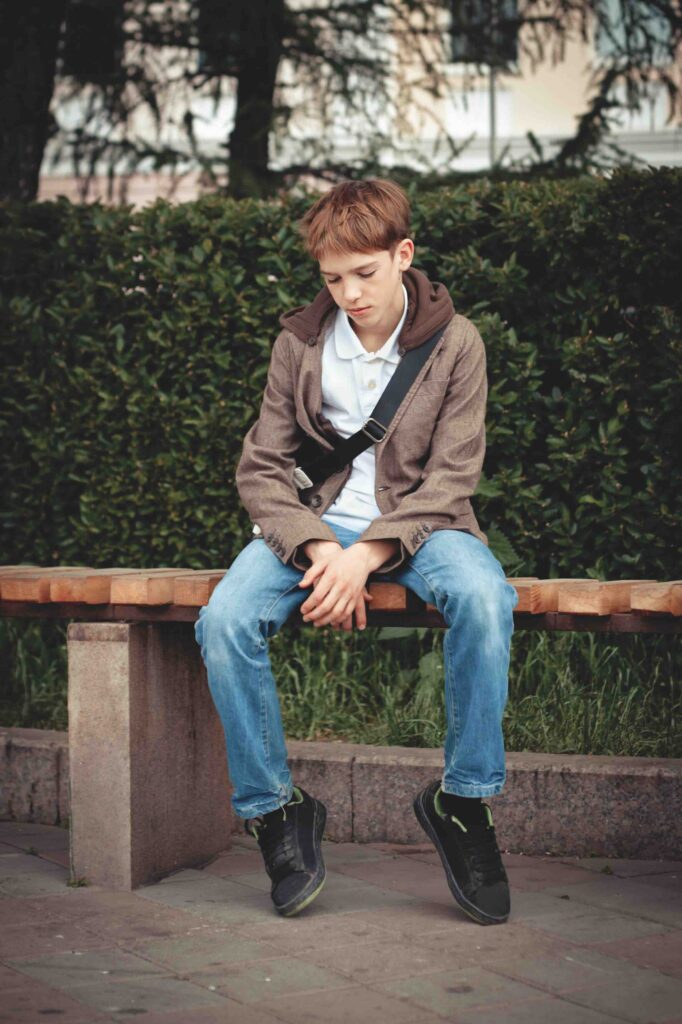
Some ideas for supporting young people who are experiencing grief and loss is as follows:
- Be honest and direct: Using euphemisms or making vague statements can be confusing. Be kind and clear in your communications.
- Validate and acknowledge how they are feeling: Name it to tame it. Normalise all the feelings for the young person. It is okay to have lots or no emotions the same time.
- Express those feelings: Expressing feelings is a good thing! We need to be able to process and normalise all feelings. Finding safe ways in which a young person can express themselves is a great idea. For example, writing, drawing, playing or acting feelings out.
- Follow their lead: Listen to the young person and be guided by them. Really hear what they have to say and be guided (when possible and if realistic/ helpful/ healthy) by their needs and what they are telling you.
- Follow up and check back in: Let them know that they can check in and check out with you. Younger children may only want very short or brief discussions as opposed to older children who may want more in depth or lengthy conversations.
- Explore faith or religion if appropriate: Link them back in with their parents or other spiritual guardians in their family. Sometimes a sense of faith or belief system can help support young people.
- Assess their current development level: Children under the age of eight may still have some “magical thinking” around death or may not fully understand what death means.
- Provide routines and consistency: When things are different and unpredictable in some areas school can be calm and predictable. In what other areas of the young persons life can you try to get some of the consistency through routine and predictability?
- It isn’t always about death: Sometimes grief and loss is about a change at home, moving, a change of school, or the breakdown of parents’ relationships. Sometimes it is a family pet who has passed who can have a significant impact.
Where to from here?
Further information and resources for parents, educators and young people can be found through these great websites:
Learning through Loss
https://learningthroughloss.org.au/
Headspace
https://headspace.org.au/explore-topics/for-young-people/grief-and-loss/
Reach out
https://au.reachout.com/challenges-and-coping/grief-and-loss
13yarn
https://manualofresources.com.au/2023/12/12/13yarn-grief-loss-and-sorry-business-fact-sheet/
Parenting SA
https://parenting.sa.gov.au/pegs/PEG06-Grief-and-loss.pdf
References
1. 10.1007/s40653-021-00435-0. PMID: 35106114; PMCID: PMC8794619.
2. Olsen, S., A. Cunsolo, J. Lammiman, and S. L. Harper. 2025. “This is what I love and this is what’s at risk”: how climate grief reveals values that inspire climate action. Ecology and Society 30(4):9. https://doi.org/10.5751/ES-16582-300409.
3. Kübler-Ross, E. (1969). On Death and Dying. New York, NY: Macmillan.
4. Stroebe, M., & Schut, H. (1999). The dual process model of coping with bereavement: A decade on. OMEGA—Journal of Death and Dying, 61(4), 273–289. https://doi.org/10.2190/OM.61.4.b
5. Tonkin, L. (1996). Growing around grief—another way of looking at grief and recovery. Bereavement Care, 15(1), 10. https://doi.org/10.1080/02682629608657376
6. ABS Statistics on the experience of parental grief and loss in childhood. https://www.abs.gov.au/AUSSTATS/[email protected]/Lookup/4102.0Main+Features40Sep+2010
7. Joy, C., Staniland, L., Mazzucchelli, Skinner, S., Cuddeford, L., & Breen, L. (2024). What Bereaved Children Want to Know About Death and Grief. J Child Fam Stud 33, 327–337 (2024). https://doi.org/10.1007/s10826-023-02694-x
8. Elsner, T. L., Krysinska, K., & Andriessen, K. (2022). Bereavement and educational outcomes in children and young people: a systematic review. School Psychology International, 43, 55–70. https://doi.org/10.1177/01430343211057228.
9. McKay, M., Cannon, M., Healy, C., Syer, S., O’Donnell, L., & Clarke, M. C. (2021). A meta-analysis of the relationship between parental death in childhood and subsequent psychiatric disorder. Acta Psychiatrica Scandinavica, 143, 472–486. https://doi.org/10.1111/acps.13289.
10. Syer, S., Clarke, M., Healy, C., O’Donnell, L., Cole, J., Cannon, M., & McKay, M. (2021). The association between familial death in childhood or adolescence and subsequent substance use disorder: a systematic review and meta-analysis. Addictive Behaviors, 120, 106936. https://doi.org/10.1016/j.addbeh.2021.106936.
11. Menendez, D., Hernandez, I. G., & Rosengren, K. S. (2020). Children’s emerging understanding of death. Child Development Perspectives, 14, 55–60. https://doi.org/10.1111/cdep.12357.