Australian Association for the Education of the Gifted and Talented: Varied voices of the gifted
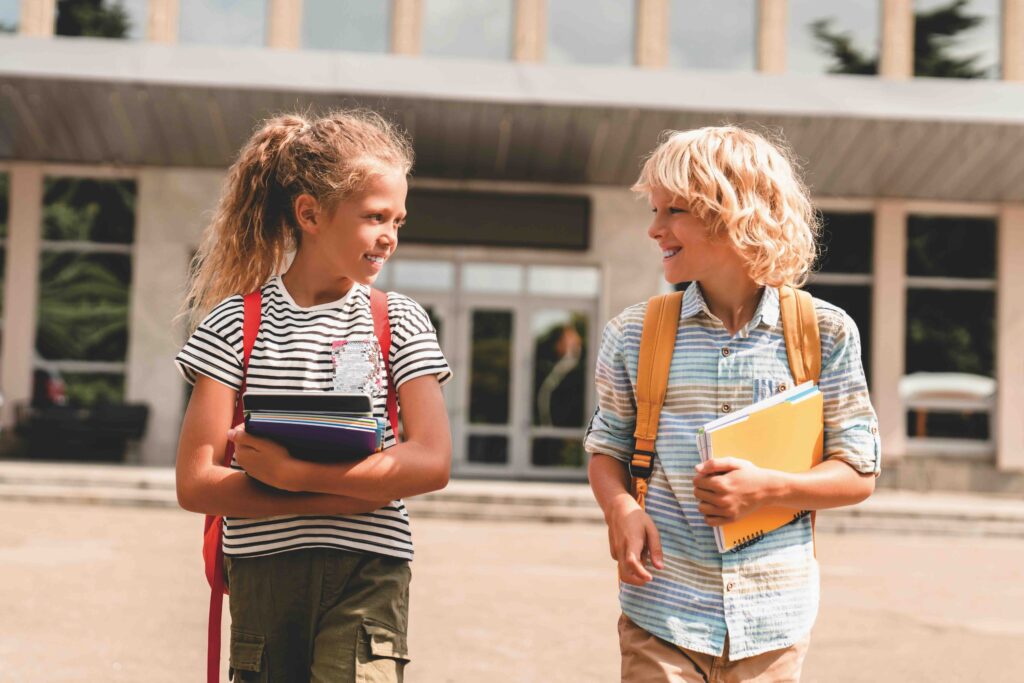
The term gifted is often associated with students who are high-achieving and in no need of additional support. Unfortunately, however, this misconception can be harmful. Many gifted children do not match the common stereotype of the bright, top-of-the-class student, despite needing educational adjustments to support their wellbeing and learning.
In Australia, the identification of giftedness typically relies on parents or teachers to recognise and refer students. However, without specific training it is easy to unintentionally overlook a large proportion of gifted learners who present in unexpected ways. As a consequence, the needs of these children can go unnoticed in busy classrooms.
Who are underrepresented gifted students?
Although giftedness occurs across all cultures and socio-economic groups, gifted programs have traditionally included disproportionately higher numbers of students who are from Caucasian or Asian backgrounds, from higher-income families, and boys.
Research shows that students from lower socioeconomic status (SES) backgrounds, culturally and linguistically diverse backgrounds, Indigenous students, girls, and those living in rural or remote areas are often overlooked for gifted education supports.
What are the risks of under-identification?
Giftedness is much more than an achievement difference. This means that children who do not appear to be very high achieving can still experience debilitating levels of boredom and disengagement. Researchers further describe a range of risks associated with unsupported giftedness in children including frustration, irritability, anxiety, perfectionism, depression, low self-esteem, low motivation and social isolation.
Masking of abilities and underachievement to maintain social acceptance is also reported, particularly among girls. Furthermore, highly to profoundly gifted children can experience even greater levels of stress and isolation.
Gifted students from low socioeconomic backgrounds
It is well established that gifted children from socioeconomically disadvantaged backgrounds encounter multiple, intersecting barriers within the educational system. These challenges encompass issues related to identification, access to resources, and the availability of suitable interventions and programs designed to cultivate their potential.
Although this issue is prominent in Australia, it reflects a broader international concern regarding educational inequity and social justice. The lack of equitable opportunities for disadvantaged gifted students not only hampers their individual development but may also perpetuate cycles of economic disadvantage, to further exacerbate societal inequality.
Research by Jung underscores this neglected demographic, characterising gifted students from low SES backgrounds as “among the most neglected groups within our education system”. The marginalisation of this population is also reflected in Australia’s declining performance in international assessments such as PISA and TIMSS. Such declines suggest systemic shortcomings in identifying, supporting, and nurturing gifted students from disadvantaged backgrounds.
In response to these issues, the New South Wales Department of Education commissioned a comprehensive literature review in 2019. The review aimed to synthesise current research on gifted learners, with particular emphasis on their diverse backgrounds, to inform school policies, teaching practices, and resource allocation. Evidence indicates that gifted students from socioeconomically disadvantaged backgrounds often experience a declining academic trajectory and are less likely to access specialised gifted programs. Additionally, they face reduced opportunities to complete secondary and tertiary education to potentially limit their future socioeconomic mobility.
Furthermore, even when targeted programs are available, they frequently fail to sufficiently serve this vulnerable demographic. For instance, Perth Modern School, Western Australia’s only fully selective public academic institution, shows a significantly skewed socioeconomic profile in its student body. Specifically, data reveals that only one per cent of students hail from the bottom quartile of the Index of Community Socio-Educational Advantage (ICSEA), and a mere five per cent from the bottom two quartiles.
Conversely, a substantial 79 per cent of students fall in the upper quartile. It is also worth noting that zero per cent of students are Indigenous, highlighting persistent inequities within elite educational settings.
Addressing these disparities is crucial not only for fostering individual potential but also for enhancing Australia’s overall educational outcomes and international rankings. Strategies to improve the identification, support, and participation of disadvantaged gifted students are imperative for promoting inclusivity, equity, and social justice within the education system.
The policy gap
Unfortunately, there is a gap in Australia’s current policy landscape. Giftedness on its own is not recognised within the Nationally Consistent Collection of Data on School Students with Disability (NCCD). That means schools can’t claim NCCD adjustments funding based on giftedness alone.
Nevertheless, when a gifted student also has a disability or learning difficulty (for example, ADHD, autism, dyslexia and/or anxiety), schools can sometimes access support through those co-occurring needs. But for gifted students without a recognised disability, or whose disability isn’t formally diagnosed, schools are often left to do more with the same resources.
This is not a criticism of schools; it’s a structural reality. When the funding model doesn’t reflect the learning need, the message it sends, though it may be unintended, is that meeting gifted learners where they are is optional. It isn’t.
Gifted Awareness Week 2026
The AAEGT’s 2026 Gifted Awareness Week theme, Varied Voices of Gifted, invites us to listen more carefully and act more concertedly, especially for those gifted learners who too often go unrecognised.
Those supporting gifted young people need to be aware that giftedness is messy and diverse: The child who reads three years ahead yet melts down at the sound of the hand-dryer; the teen building a climate-model in Python while forgetting to submit the homework portal form; the quiet student whose sketchbook is a world map of ideas, annotated in six colours and three languages.
These are varied voices, of children, parents, educators, and clinicians, who are all asking for a system that recognises complexity, not just high scores.
The story is bigger than talent. Supporting Gifted and Talented students supports access, equity, and the right to an education that fits its learners.
Follow us or visit the website from May 18 to 24, 2026 to learn more about Gifted Awareness Week.
References
1. https://doi.org/10.3390/educsci15081012
2. 10.1177/23328584231171535
3. 10.1016/j.cedpsych.2013.07.002
4. 10.1177/1932202×221076385
5. https://search.informit.org/doi/10.3316/informit.260233781408608
6. https://www.erudit.org/en/journals/ijtdc/2022-v10-n1-2-ijtdc08046/1099953ar/
7. Lyons, K.M. A Toolkit for Teacher Recognition of Underachieving Gifted Students: An Intervention Study with Victorian Teachers. Doctoral Dissertation, Victoria University.
8. http://dx.doi.org/10.1080/02783198909553207
9. https://doi.org/10.1080/02783199109553355
10. https://www.unsw.edu.au/newsroom/news/2023/05/neglecting-gifted-students-in-education-has-costs-for-all-australians
11. https://www.cese.nsw.gov.au/publications-filter/revisiting-gifted-education
12. https://myschool.edu.au/school/48148