
Playground Centre: Wobbly Wood – Australian timber play equipment for every age
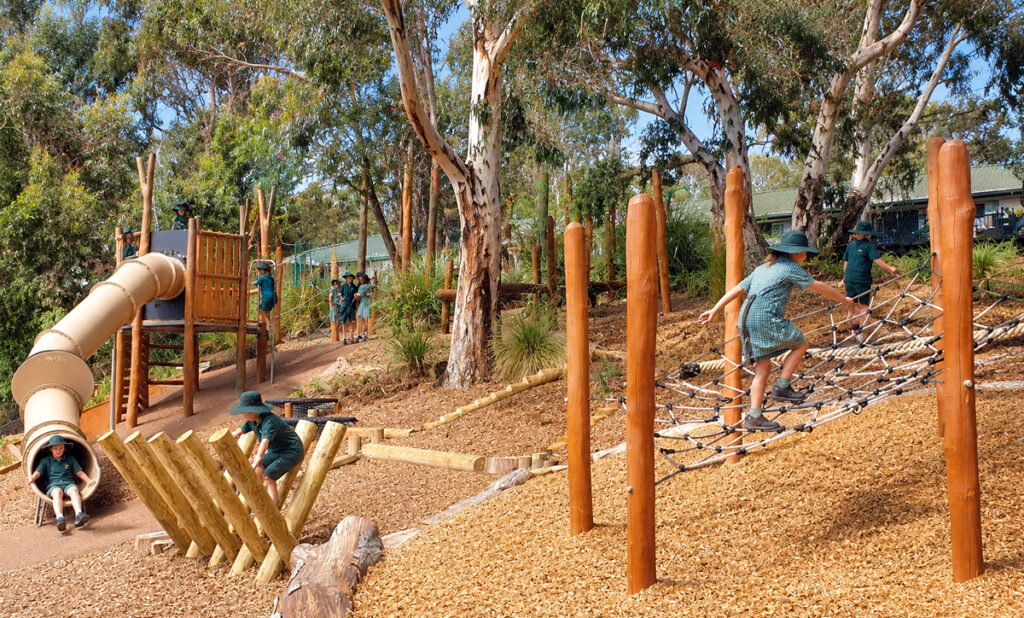
Timber playgrounds hold a special kind of magic for students, especially when the timber is grown and crafted into play equipment right here in Australia. Playground Centre’s Wobbly Wood range brings that magic to school campuses, with play options for prep to secondary-aged students.
Nature play that keeps students moving
Research shows children who play among natural elements are more active and more imaginative in their play. Timber’s texture and organic forms invite children to climb, balance and role play. In busy school days, that extra movement and creative play can support focus, mood and social confidence back in the classroom.
Wobbly Wood structures are shaped to echo trees, branches and fallen trees in forests, so even a compact urban school can offer a nature-rich play experience.
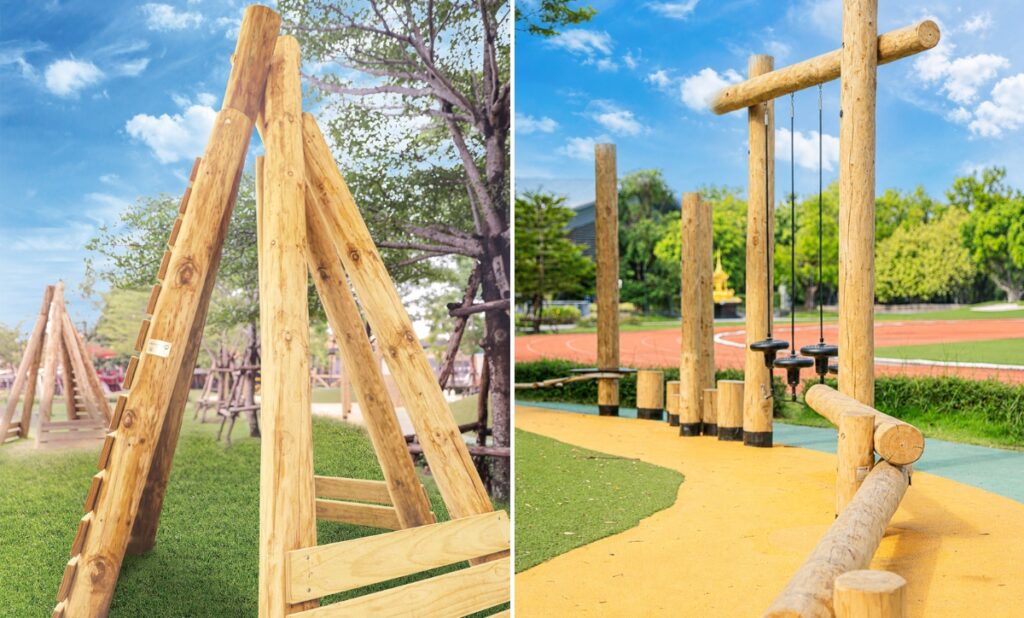
From Teepees to Twig Stacks and Activity Trails
Playground Centre’s ever-growing Wobbly Wood range is diverse, with over 30 items ranging from classic swings and rockers to innovative climbing structures and even flying foxes – so schools can design play zones to cater for any age group.
For younger children, the Wobbly Wood Teepee creates a welcoming hideaway that encourages imaginative play, storytelling and early social skills.
Twig Stack climbing structures step things up with real challenge and choice. Available in different sizes and configurations, Twig Stacks combine angled hardwood posts and can include built-in activities such as rope nets, so student can choose their level of difficulty – playing in and around the stack or clambering to the top.
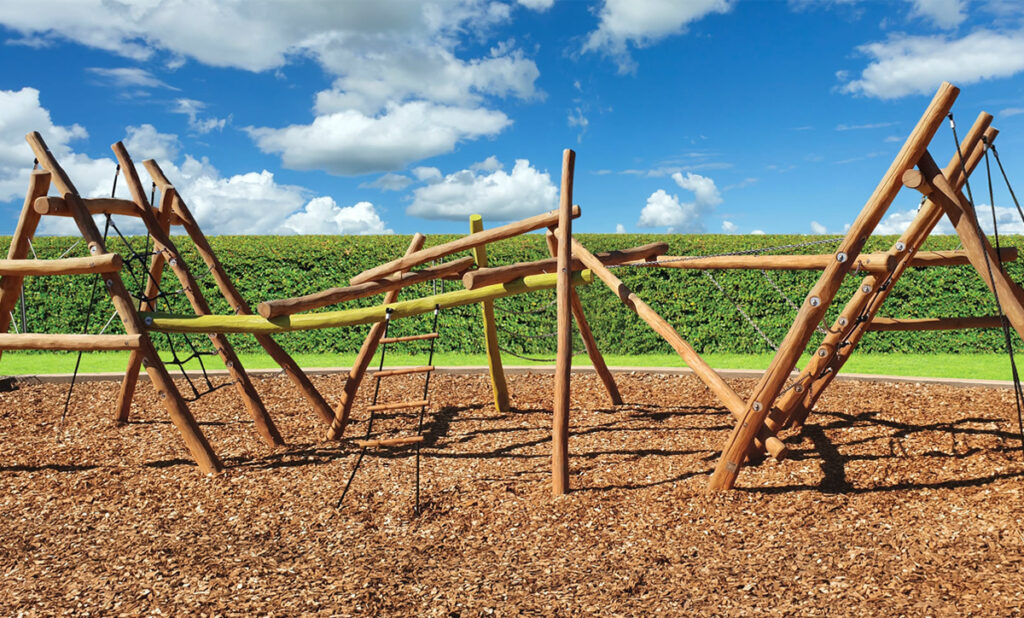
For whole-of-school movement, Wobbly Wood Activity Trails link elements like balance beams, stepping logs and bridges to create obstacle courses. These work brilliantly for active breaks, outdoor PE and informal fitness, especially when space is tight and schools want multi-purpose equipment that suits students from upper primary through to secondary.
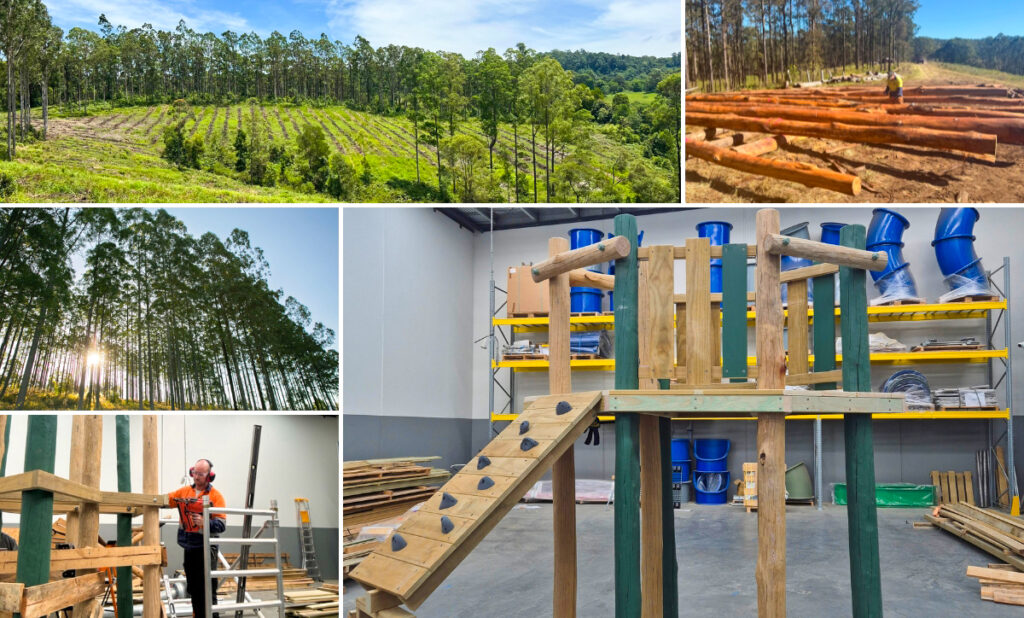
From forest to playground: a renewable Australian timber story
The timber story behind Wobbly Wood matters just as much as the play benefits. For projects across Australia, Playground Centre sources purpose-grown Australian hardwood from sustainably managed plantations in New South Wales. These plantations are managed in rotations, selectively thinned to support healthy growth and continuously regenerated, creating a long-term, renewable resource for playground construction.
For schools, that means every Wobbly Wood structure combines the character of real timber with a smaller environmental footprint. Australian hardwood also offers outstanding strength and durability in outdoor environments, which supports lifecycle value and long-term structural integrity.
Playgrounds designed and made for Australian schools
Playground Centre brings decades of design-to-delivery expertise together with Australian manufacturing, with a production base in Victoria supporting local projects. The team works with schools to tailor Wobbly Wood solutions to their site, age groups and play goals, from single feature pieces to interconnected nature playspaces.
Explore the Wobbly Wood range online, then book a chat with one of Playground Centre Australia’s play consultants to plan a solution that fits your campus and school community.
1800 092 897
[email protected]
playgroundcentre.com
27B Peterpaul Way, Truganina VIC 3029
LinkedIn