Civiq: How long has that bubbler been hanging on?
The school maintenance list never seems to shrink.
One week it’s a leaking tap. Next, a worn patch near the toilets. Then it’s time for a grant application. And at the next P&C meeting, everyone’s looking for something useful, visible, and worth the effort to support.
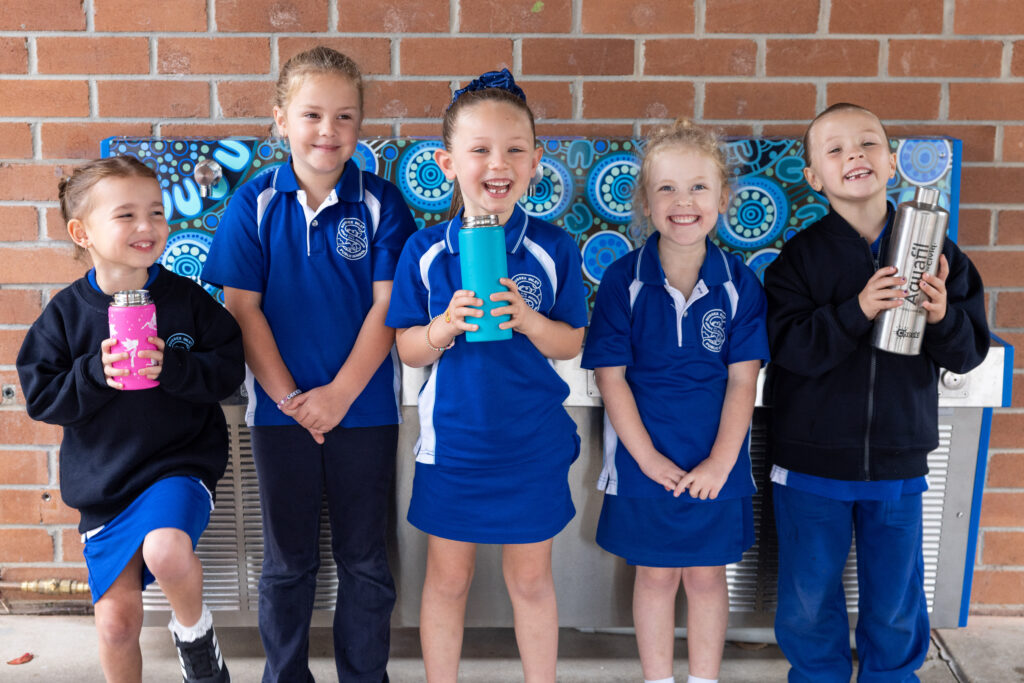
And then there’s the old bubbler. Still hanging on.
Still dripping. Still looking tired. Still getting patched up. Still not giving students the clean, easy water access they deserve.
It might not shout for attention, but it never really goes away.
That’s why upgrading your hydration setup makes sense as a capital purchase. Not just because it’s shiny and new.
Because it solves a problem that everyone on campus can see, every single day.
The real cost of keeping the old setup
Old drinking troughs might seem cheaper to keep.
Until the taps stop working again.
Until the flow slows down.
Until the finish starts to rust.
Until students avoid it and buy drinks instead.
But then the real cost isn’t just repairs. It’s staff time, extra maintenance, poor presentation, and an asset that’s no longer doing its job.
A smart replacement puts an end to that cycle.
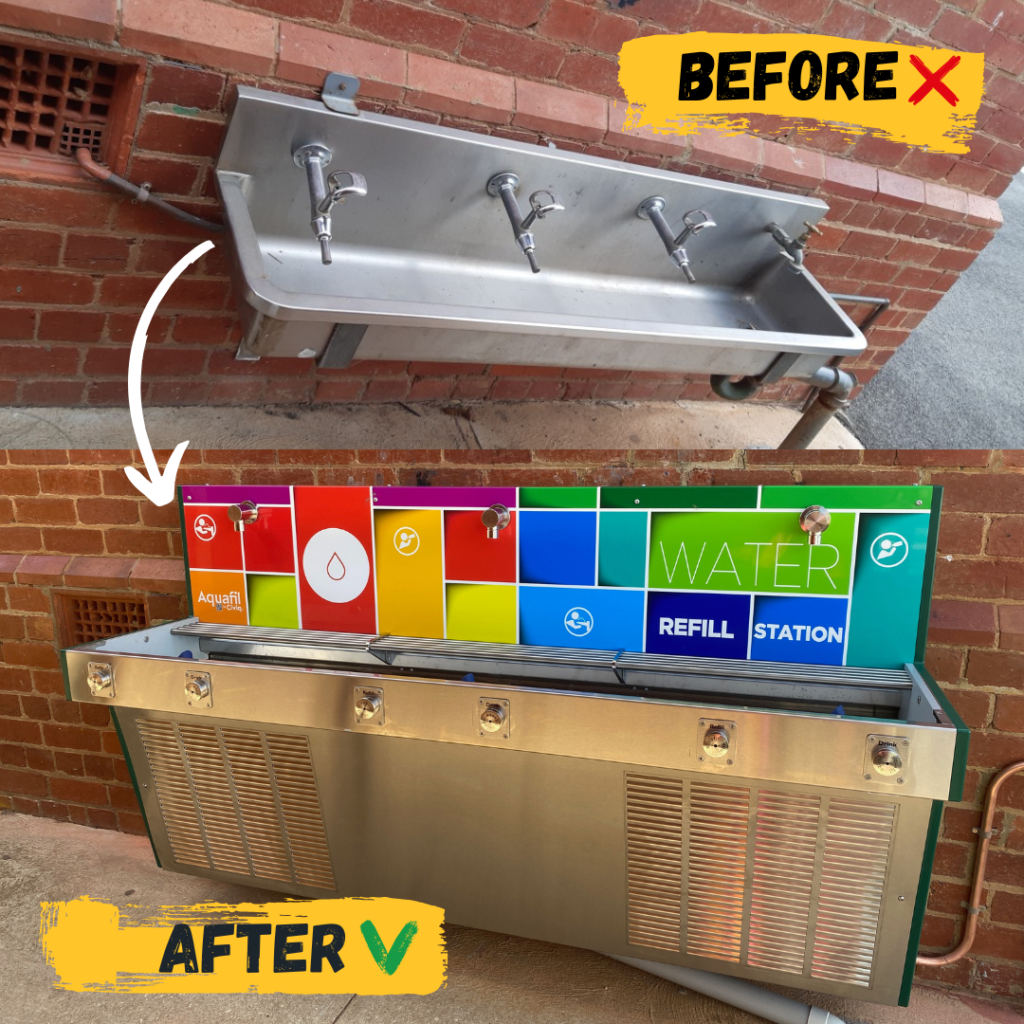
What Business Managers need to know
A great hydration station does more than look good on day one.
It should:
- handle heavy school traffic
- support bottle refills and drinking fountains
- stay easy to clean and maintain
- suit the site and existing plumbing where possible
- offer long-term value, not just a lower upfront price
That’s the kind of purchase you can stand behind.
It solves a real problem. It supports student well-being. It cuts down on repeat maintenance. And it gives your school a visible upgrade the whole community can enjoy.
Proof from schools that made the change
Berwick College had a drinking water setup that students had stopped using.
Business Manager Ken put it plainly:
“Our existing drinking troughs were very old, and 60% of the taps did not work. Students would not use them due to their appearance.”
The school replaced the old setup with eight Aquafil Hydrobanks, giving students 48 places to drink or refill across campus.
The result was clear.
“Students are now using the drinking stations to not only fill their bottles but also to drink water from the hygienic fountains.”
That’s the result every school wants: a practical upgrade that looks better, works better, and gives you confidence your investment was worth it.
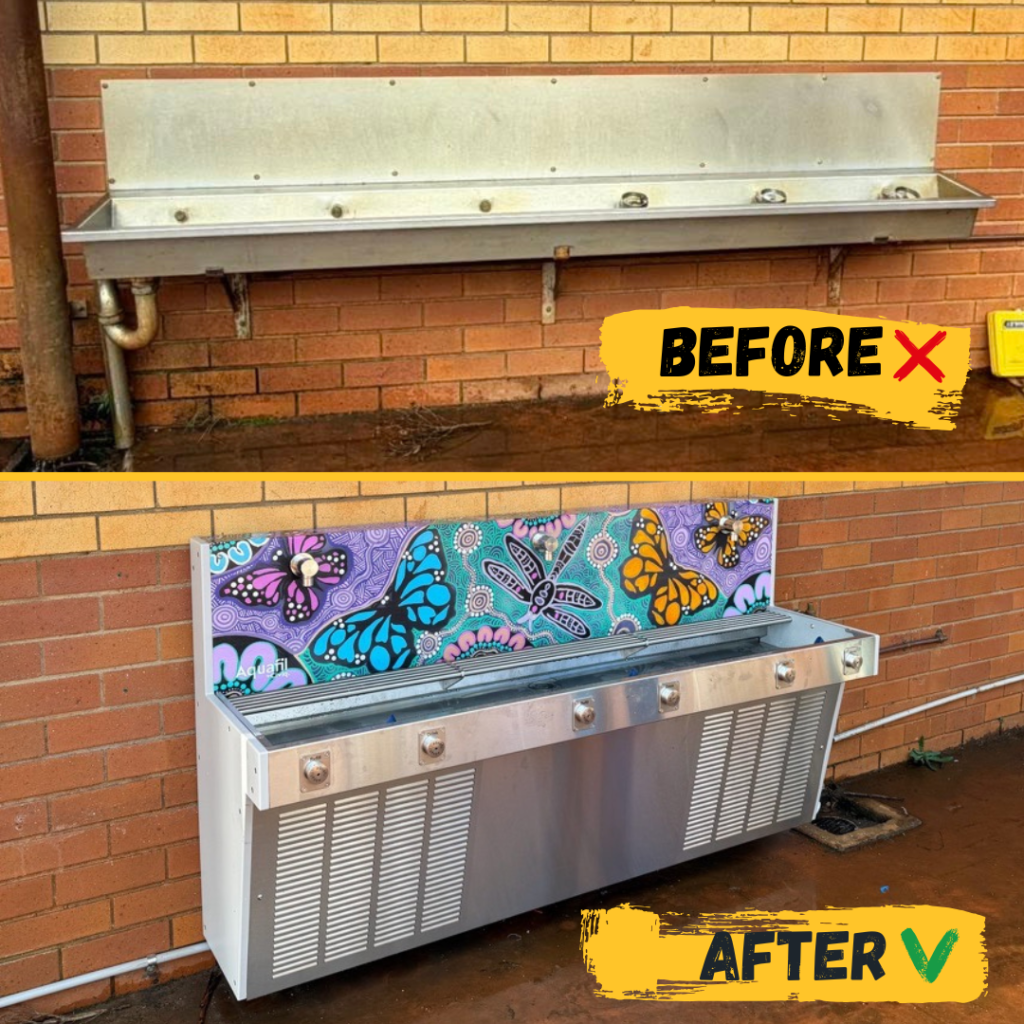
Read more: Berwick College’s Hydration Upgrade
What should you look for in a hydration station?
The right station should fit the way your students use the space.
Before choosing, look at:
- capacity during recess and lunch
- bottle refill access
- drinking fountain access
- hygiene-focused design
- easy cleaning and maintenance
- Australian-made quality
- local support and clear warranty information
- artwork, colours, or branding options
These details matter. They help you choose a station students will actually use, and one that won’t keep adding work for your team.
Ready to review your school’s hydration setup?
Book a free Hydration Review with our team. You’ll receive a clear plan, the right station options, and a tailored quote for your school.
Mention EDUAU26 to receive a Free Aboriginal Art Panel on qualified orders.
1300 600 300
civiq.com.au/educationau