
ParentTV: How to get more than “Fine” when you ask about school
Free to share with your school community! You’re welcome to copy, paste and publish the following article in your school newsletter, website or parent portal (unaltered, with attribution).

Many parents know this moment: you pick your child up, you’re genuinely excited to hear about
their day, and you ask, “How was school?”
They reply: “Fine.”
You try again: “What did you do?”
They say: “Nothing.”
It can feel confusing (and honestly a bit disheartening). But here’s the key insight: many children can’t easily pull a whole day’s worth of memories into a neat story on demand.It’s not stubbornness, it’s a skill that develops over time.
So instead of asking children to retrieve the whole day, we can help them by starting the story for them.
The “Start the story” approach
Rather than open questions like “How was your day?” try offering a small detail you already know, then invite them to fill in the rest.
This might mean doing a tiny bit of “extra legwork” first:
- checking the class newsletter or weekly plan
- noticing a photo from the day (if your school shares them)
- asking the teacher what the class focus was this week
- remembering a special event on the calendar
Then use one detail as the “front cover” of the story — and let your child supply the pages.
What to say instead (simple scripts)
Try:
- “I heard you did today… what was that like?”
- “I saw a photo of you … what do you remember about that?”
- “Your teacher said you were learning about … tell me the funniest bit.”
- “Sounds like happened today. Who was with you?”
- “If today was a story, what would the title be?”
A quick example
Instead of: “What did you do today?”
Try: “I saw you were looking inside a pumpkin today, what was that like?”
You’ll often get sensory details (“gooey”, “squishy”) and then… the real gold: what actually happened, who was involved, and how they felt about it.
Why this works
When you offer a specific “hook,” you:
- jog their memory
- reduce the pressure of answering the “big question”
- make it easier for them to share details (and feelings) naturally
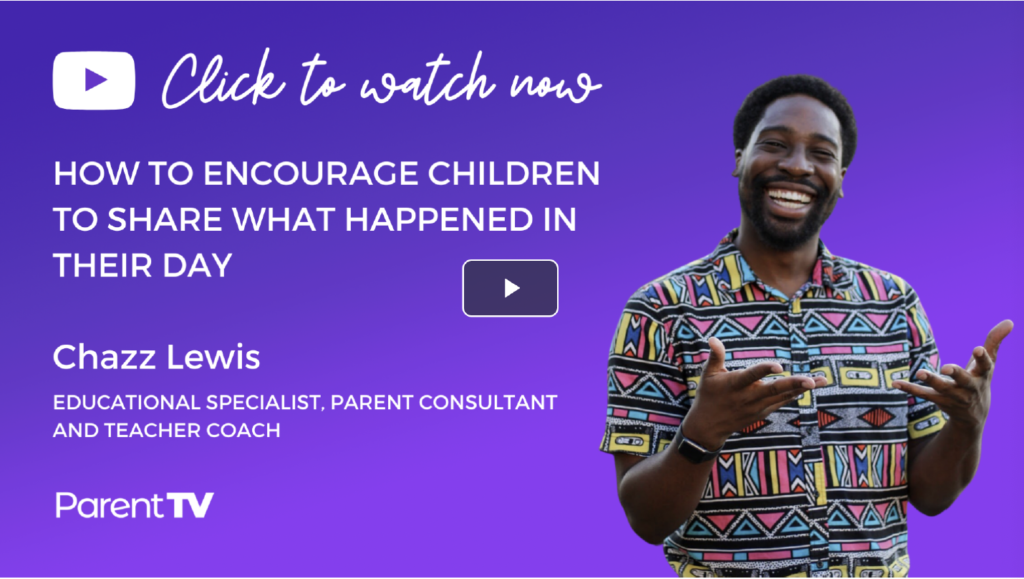
If you’d like a short video that explains this approach in a really practical way, Mr Chazz (Chaz
Lewis) breaks it down beautifully on ParentTV click the image below.
To find out more about ParentTV for schools visit https://parenttv.com/schools or email [email protected]
0401 198 625
[email protected]
parenttv.com/schools
seenthefilm.com

